Do Hot Springs Resorts Add Chlorine? Flow-Through vs. Recirculation Explained
One of the most common questions before booking a hot springs trip, and one of the hardest to get a straight answer to, is whether the water is chlorinated.
The honest answer is that it usually depends on the pool rather than the resort. At many geothermal properties, some pools are chemically treated and others are not, and the reason comes down to whether the water moves through the pool or stays in it.
This guide explains the difference, what state health regulations generally require, and how to find out what you will be soaking in before you arrive.
Flow-Through vs. Recirculation
| Method | How It Works | Chemical Treatment |
|---|---|---|
| Continuous flow-through | Mineral water enters and exits the pool constantly, so the entire volume is replaced on an ongoing basis. | Generally none required |
| Recirculation with disinfection | Water is filtered and returned to the pool, which requires a measurable disinfectant residual to stay safe. | Chlorine or an approved equivalent |
| Heated and treated municipal water | Conventional pool water warmed mechanically, sometimes with mineral compounds added. | Standard pool chemistry |
The first method is the one guests picture when they imagine a hot spring, and it is only possible when a property has a live geothermal source producing enough volume to keep water moving continuously.
Why Flow-Through Pools Do Not Need Additives
A conventional swimming pool holds the same water for weeks or months. Anything introduced into it stays until it is filtered out or chemically neutralized, which is why continuous disinfection is required.
A flow-through mineral pool works on a different principle. Water arrives from the source, passes through the soaking basin, and exits. Rather than treating a static volume, the pool is continually replaced with fresh mineral water, so cleanliness comes from turnover rather than chemistry.
This also preserves the water’s mineral composition. Naturally geothermal water carries dissolved minerals accumulated through long contact with subsurface rock, and chemical treatment changes what is in the water. Flow-through keeps the source profile intact, which is the entire point of soaking in geothermal water rather than a heated pool.
What Regulations Generally Require
Commercial soaking pools are regulated as public pools in every state, and public pools must maintain a measurable disinfectant residual. That is the default rule, and it applies to any pool that recirculates its water.
Many states also recognize that a continuously flowing mineral spring is a different kind of system. Where a pool meets a defined fresh water flow standard, and where ongoing bacteriological testing confirms the water is clean, health codes commonly allow that pool to operate without continuous chemical disinfection. Pools that do not meet the flow standard must be disinfected like any other public pool.
Specific thresholds, testing frequency, and exemption language vary by state, so the practical effect differs from property to property. But the underlying logic is consistent: enough fresh water moving through, plus verified water quality, can substitute for chemical treatment. Not enough flow means chemistry is required.
That single principle explains why a hot springs resort can accurately say some of its pools are untreated while others are chlorinated. Both statements can be true at the same property, for different pools.
How Temperature Management Fits In
Source water at many geothermal properties arrives far too hot to soak in, which raises a second question guests often conflate with chlorination: how is it cooled?
There are two approaches. A property can cool water mechanically, or it can temper it with a second natural water source. The second method preserves more of the mineral character, because the water is being blended rather than processed.
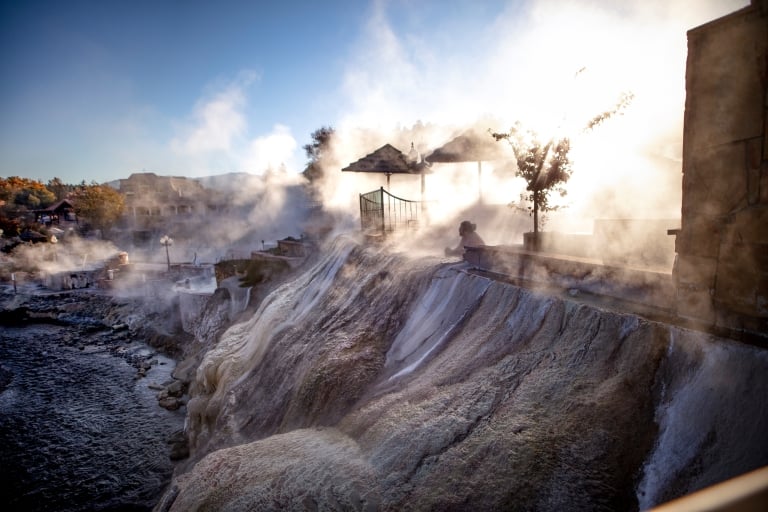
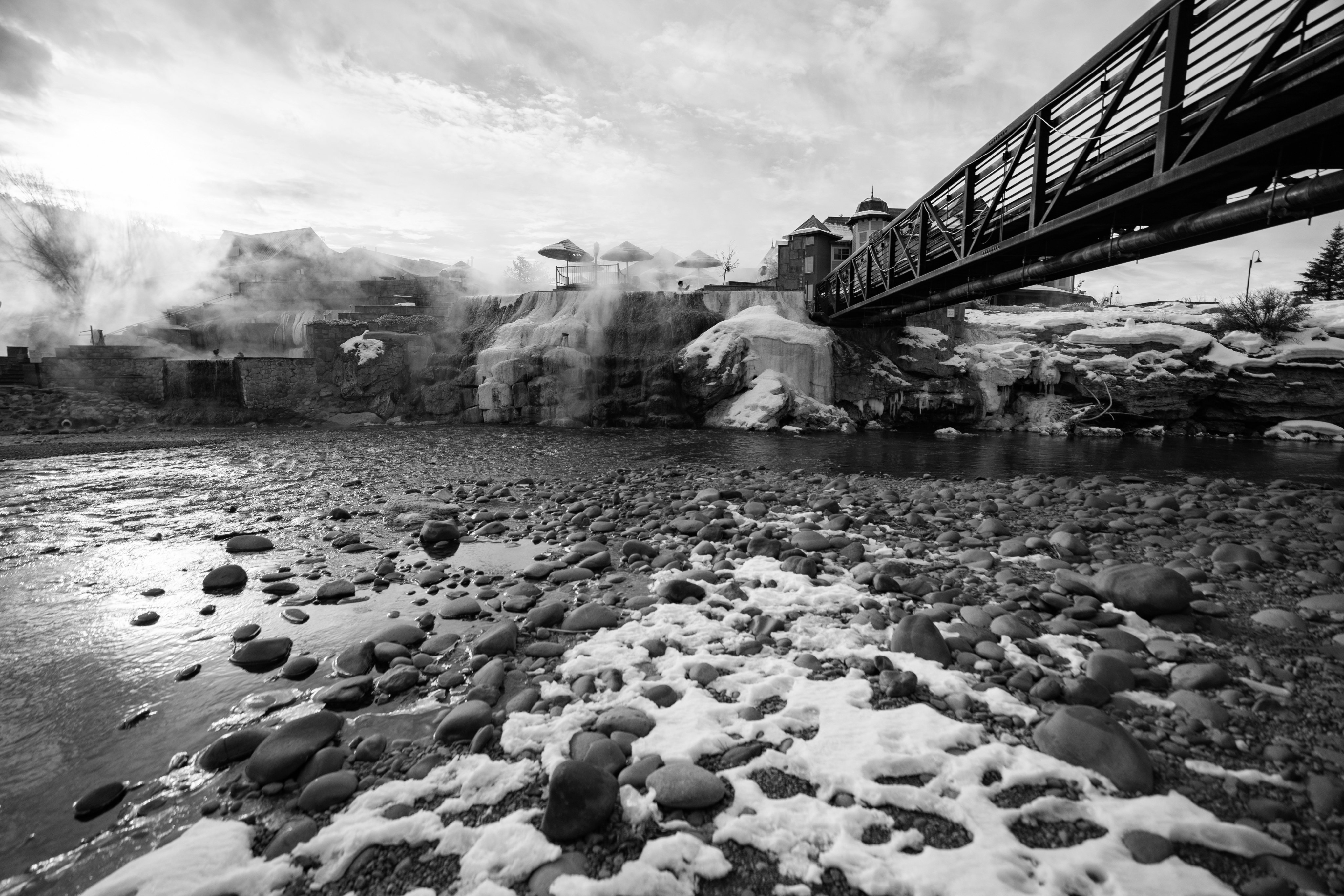
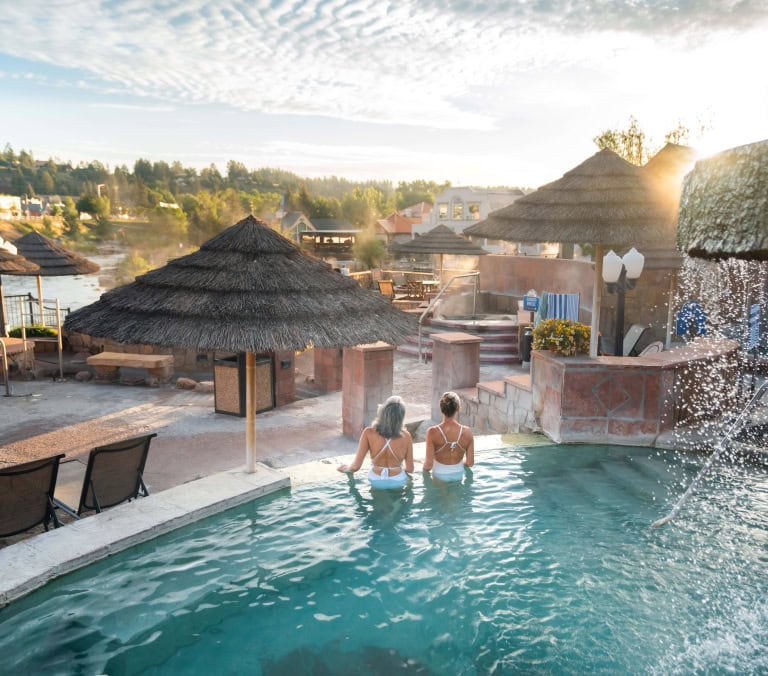
The Springs Resort in Pagosa Springs uses the natural approach. Its Mother Spring, which holds the Guinness World Records title for the deepest geothermal hot spring measured by a plumb line at 1,002 feet, supplies the hot water for the property, while the adjacent San Juan River supplies the cold water used to temper the pools. The temperature range guests move through, from cold plunges around 35°F to hot pools reaching roughly 112°F across 50+ geothermal pools, is produced by two natural sources rather than by heating and chilling equipment.
The spring carries 13 naturally occurring therapeutic minerals, and every pool on the property draws from that same source.
Does Chlorine Change the Benefits of Mineral Water?
Chlorination does not remove the dissolved minerals in geothermal water. Sulfate, silica, calcium, bicarbonate, and the rest remain present in a treated mineral pool.
What changes is the character of the water. Guests often describe treated pools as feeling slightly different on the skin, and the chemical scent is noticeable to some. The heat, buoyancy, and hydrostatic pressure that drive much of the therapeutic response to thermal bathing are unaffected.
Research on balneotherapy points to a combined mechanism, with the physical properties of warm water immersion working alongside the chemical action of dissolved minerals. Both are present in a chlorinated geothermal pool. For guests who want the water as close as possible to how it emerges, flow-through pools are the ones to seek out.
How to Find Out Before You Book
Ask these directly. Any property that manages its water well will answer without hesitation.
Which pools use flow-through, and which recirculate? This is the question that actually determines chemical treatment.
Is the source water geothermal, or heated? Heated municipal water is always treated, without exception.
How is the water cooled? Tempering with a natural cold source preserves more mineral character than mechanical chilling.
How often is water quality tested? Untreated mineral pools are subject to regular bacteriological testing requirements.
Are minerals naturally occurring or added? Properties with real geothermal water publish their mineral profile.
A vague answer to a specific question is worth noting. All natural is marketing language, not an operational description.
To plan a visit to The Springs Resort, visit pagosahotsprings.com.
Frequently Asked Questions
Do all hot springs resorts use chlorine?
No. Properties with sufficient natural flow can operate soaking pools without chemical disinfection, subject to water quality testing. Many run a mix, with untreated flow-through pools alongside recirculating pools that require treatment.
Is chlorinated mineral water still mineral water?
Yes. Disinfection does not strip out dissolved minerals. The mineral profile of the source water remains, though the feel and scent of the water change.
How can I tell if a pool is chlorinated?
Smell is the most common cue, though it is not definitive, since some mineral waters carry a sulfur odor of their own. The dependable approach is to ask the resort directly which pools flow through and which are treated.
Are untreated hot springs pools safe?
Pools operating under a flow exception are still regulated. They must meet all other public pool standards and satisfy ongoing bacteriological testing. The exception applies to continuous chemical disinfection, not to oversight.
Don't Miss Out!
Sign up for deals, news & more.