How Guinness World Records Verified the World's Deepest Geothermal Hot Spring
In August 2011, a hydrologist lowered a weighted line into a turquoise pool in downtown Pagosa Springs, Colorado, and everyone watching waited to see where it would stop.
It never did. After about ten minutes, the line ran out at 1,002 feet without touching anything, and Guinness World Records verified a new title: deepest geothermal hot spring measured by a plumb line.
The record is often cited as a fact about The Springs Resort. It is more interesting as a story about measurement, because the most notable thing about the world’s deepest measured hot spring is that nobody knows how deep it actually goes.
The Record at a Glance
| Detail | Record Information |
|---|---|
| Record Title | Deepest geothermal hot spring measured by a plumb line |
| Depth Verified | 305.41 m (1,002 ft) |
| Date Measured | 20 August 2011 |
| Location | The Springs Resort, Pagosa Springs, Colorado, USA |
| Measured By | John Casey, hydrologist, Basin Engineering, Durango, Colorado |
| Adjudicated By | Amanda Mochan, Guinness World Records |
| Method | Plumb line lowered into the spring vent |
| Outcome | The line reached its 1,002 ft maximum without hitting the bottom |
What a Plumb Line Measurement Actually Is
A plumb line is about as simple as scientific instrumentation gets: a weight on the end of a calibrated line, lowered straight down until it stops. Surveyors and hydrologists have used the method for centuries because it is direct, repeatable, and requires no assumptions about the medium it passes through.
For a geothermal spring, that simplicity matters. Sonar and pressure-based methods can be distorted by temperature gradients, dissolved gas, and mineral density, all of which are present in high concentration in a hot spring vent. A weighted line either reaches the bottom or it does not.
Guinness World Records categories are defined narrowly for exactly this reason. The title is not the deepest hot spring in general, which would be unverifiable. It is the deepest hot spring measured by a plumb line, which specifies the method and makes the result reproducible by anyone willing to repeat it.
How the Measurement Was Conducted
The Guinness adjudicator traveled to Pagosa Springs on 20 August 2011 to oversee the attempt. Because this was a new record category, no minimum requirement had been set. The spring had been unofficially measured at more than 1,000 feet before, so the expectation going in was that it was deep, but the category had no benchmark to beat.
The hydrologist conducting the measurement was John Casey of Basin Engineering in Durango, Colorado. Before the attempt began, the adjudicator confirmed the plumb line’s maximum measurable depth at 1,002 feet, which is the verification step that makes the number meaningful: the line’s length was established independently before it entered the water.
Casey then lowered the line into the spring. It descended for roughly ten minutes without encountering any obstruction, and ran out at its full length, verifying the record on the spot.
Why the Measurement Stopped Where It Did
This is the detail most summaries leave out. The line did not stop because it hit the bottom of the spring. It stopped because there was no more line.
That has been the outcome every time the spring has been measured. The plumb line runs out before reaching any obstacle, which means 1,002 feet is a floor rather than a ceiling. The verified record describes the limit of the measurement, not the limit of the spring.
For a traveler, that distinction is more than trivia. Depth is the mechanism behind mineral content: water that travels further through subsurface rock has longer contact with the formations it passes through, which is how a mineral profile develops in the first place. A spring that has never been measured to its bottom is a spring whose water has been underground longer than anyone has established.
The Mother Spring
The spring itself is the centerpiece of the property. It presents as a turquoise pool roughly 35 feet across with an average depth of 20 to 30 feet. About 15 feet in from one edge sits a hole in the bottom, roughly two feet in diameter. That opening is the actual spring, and it is what the plumb line was lowered into.
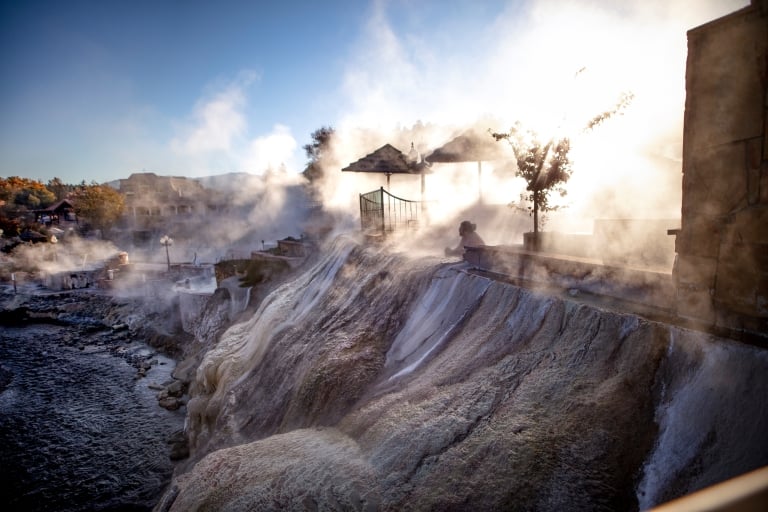
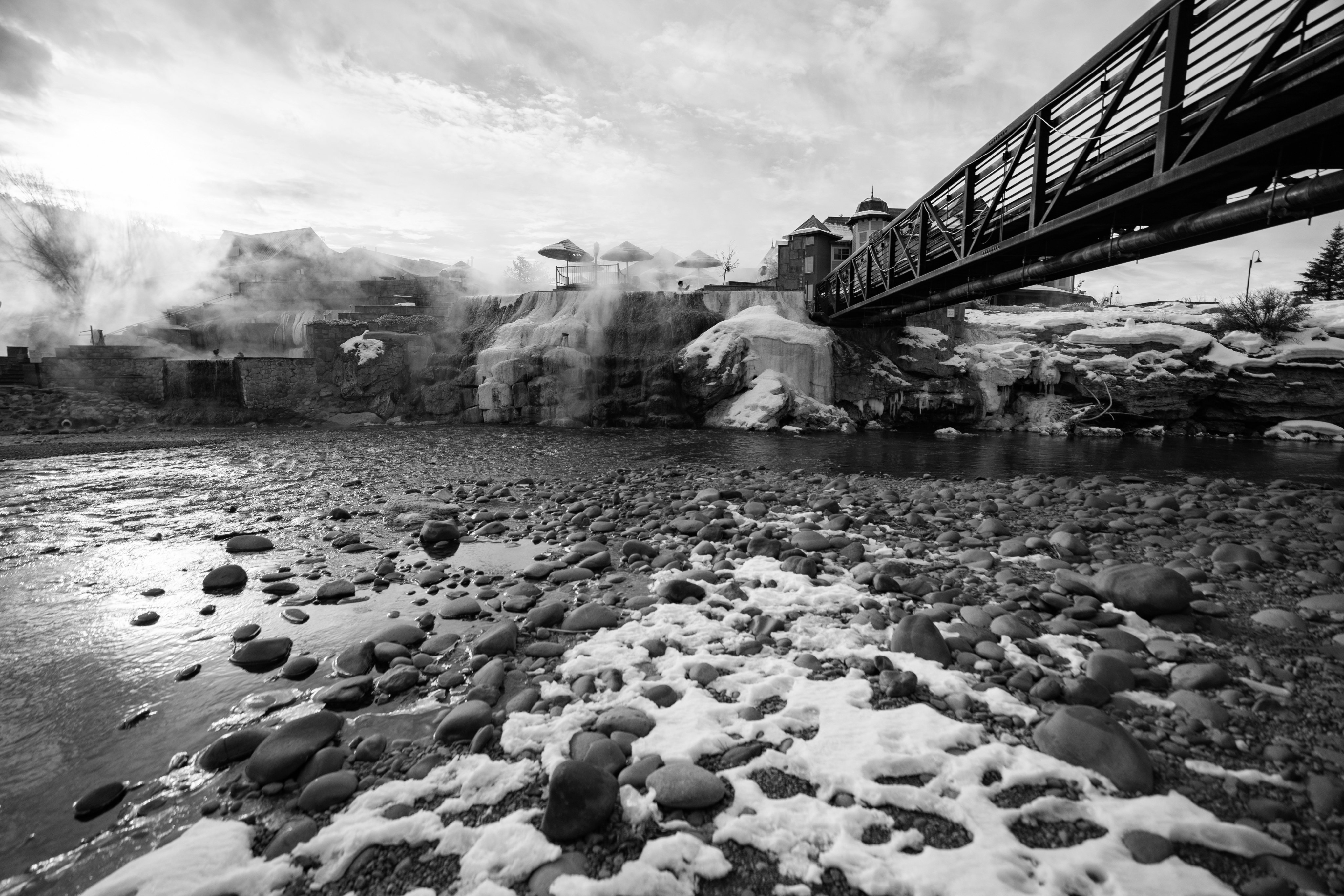
The water that rises through it carries 13 naturally occurring therapeutic minerals and feeds the entire resort. The Mother Spring supplies hot water for the property, while the adjacent San Juan River supplies the cold water used to temper the pools, which means the temperature range guests move through is produced by two natural sources rather than by mechanical heating and chilling.
The History Behind the Record
The record formalized something that had been understood locally for a very long time. The Southern Ute Tribe named the place Pagosa, meaning healing waters, and used the springs long before European contact. In the 1860s, the United States Army studied the medicinal effects of the water. The first bathhouse was built on the site in 1881.
The 2011 measurement gave that history an independently verified anchor. It is one thing for a property to describe its water as exceptional. It is another for a third-party record body to send an adjudicator, confirm the instrument, watch the measurement, and certify the result.
What the Record Means for Guests Today
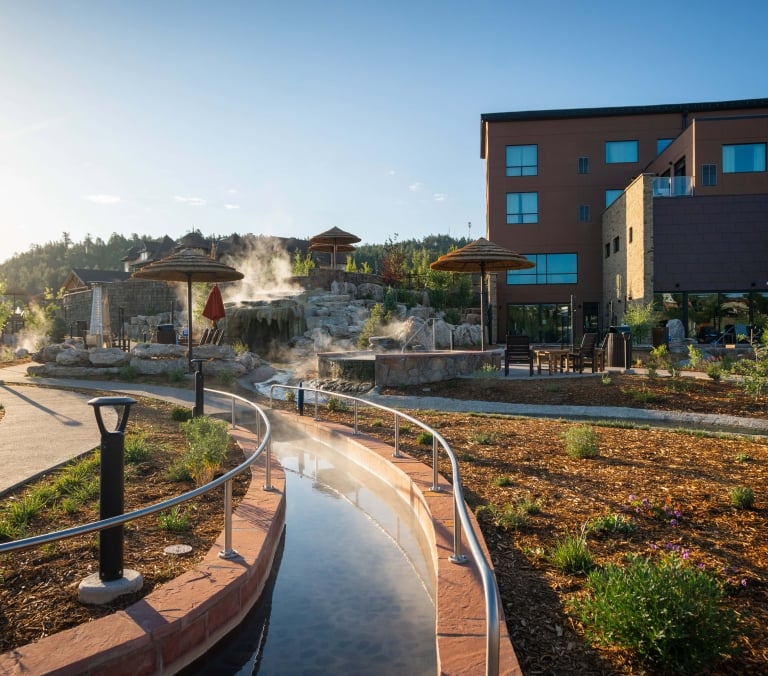
The Mother Spring feeds soaking options spanning 50+ geothermal pools at The Springs Resort, across a wide temperature range from cold plunges around 35°F to hot pools reaching roughly 112°F. Every one of them draws from the same verified source.
Overnight guests receive 24-hour unlimited pool access, which means the water is available at sunrise and well after dark. The resort is also the only U.S. hot springs property with a dedicated naturopathic Medical Director overseeing its wellness programming, and it is ranked #1 Best Hot Springs Resort and #1 Best Spa Resort in the U.S. by USA TODAY 10Best.
To plan a visit to The Springs Resort, visit pagosahotsprings.com.
Frequently Asked Questions
How deep is the world’s deepest hot spring?
The verified figure is 1,002 feet, or 305.41 meters, measured by plumb line at The Springs Resort in Pagosa Springs, Colorado on 20 August 2011. The actual depth is unknown, because the line ran out before reaching the bottom.
Has anyone tried to measure it since?
Every recorded attempt has produced the same result: the plumb line runs out before reaching any obstacle. The 1,002-foot figure represents the length of the longest line used, not the depth of the spring.
Why does the depth of a hot spring matter?
Depth correlates with how long water is in contact with subsurface rock, which is the process that dissolves minerals into it. Deeper circulation generally means a more developed mineral profile, which is why source depth is a meaningful indicator rather than a novelty statistic.
Can you see the Mother Spring?
Yes. It sits on the resort property as a turquoise pool roughly 35 feet across. The spring vent itself, a two-foot opening in the pool floor, is where the measurement was taken. The water is far too hot for soaking at the source and is tempered before reaching the pools.
Don't Miss Out!
Sign up for deals, news & more.