Soaking at Altitude: What to Know About Hot Springs Above 7,000 Feet
Most of Colorado’s hot springs sit between 6,000 and 8,000 feet. Pagosa Springs is at roughly 7,100. That elevation is a large part of why the setting is so striking, and it is also why soaking here works differently than soaking at sea level.
Nothing about it is dangerous for most healthy travelers. But visitors arriving from lower elevations often find that a soak that would feel easy at home leaves them lightheaded, thirsty, or unexpectedly tired. Understanding why makes the difference between a great first day and a wasted one.
Here is what changes above 7,000 feet, and how to adjust.
What Altitude Actually Changes
| Factor | What Happens at Elevation | What It Means for Soaking |
|---|---|---|
| Oxygen availability | Lower air pressure means less oxygen reaches your bloodstream with each breath | Your body works harder at rest, so warm immersion feels more taxing than it would at sea level |
| Hydration | Dry air and faster breathing increase fluid loss, often without obvious thirst | Dehydration builds quietly, then compounds with sweating in hot water |
| Blood pressure response | Warm water causes blood vessels to widen, lowering blood pressure | Standing up quickly after a hot soak can cause dizziness, and altitude makes that more pronounced |
| Alcohol tolerance | Alcohol has a stronger effect at elevation | A drink beside the pool goes further than expected, especially on day one |
| Sun exposure | UV intensity increases with elevation | Outdoor soaking at midday burns faster than the air temperature suggests |
| Sleep | Many visitors sleep poorly the first night at altitude | Evening soaking can help, but arriving already tired amplifies everything above |
The First 24 Hours Matter Most
Altitude effects are strongest during the first day and typically ease as your body adjusts. Most travelers feel noticeably better by the second morning.
Common first-day experiences at 7,000 feet and above include:
Mild headache
Increased thirst
Faster breathing during light activity
Fatigue that arrives earlier in the evening than usual
Disrupted or lighter sleep on the first night
These are normal responses to elevation for many people, not signs that something is wrong. What matters is not stacking a long, hot soak on top of them before your body has adjusted.
How to Soak Comfortably at Elevation
Shorten your sessions, at least at first
A 15- to 20-minute soak followed by a cooling break is a reasonable starting point at elevation, even for people who routinely soak longer at home. Extend sessions on your second and third days if you feel good.
Hydrate before you feel thirsty
At altitude, thirst lags behind actual fluid loss. Drink water before your first soak, keep a bottle at the pool’s edge, and continue after you get out. This is the single most effective adjustment most visitors can make.
Cool down between pools
Moving from a hot pool to cooler air or a cold plunge is part of the experience, but give your body a minute between transitions rather than moving straight from the hottest water into a cold plunge on arrival day.
Stand up slowly
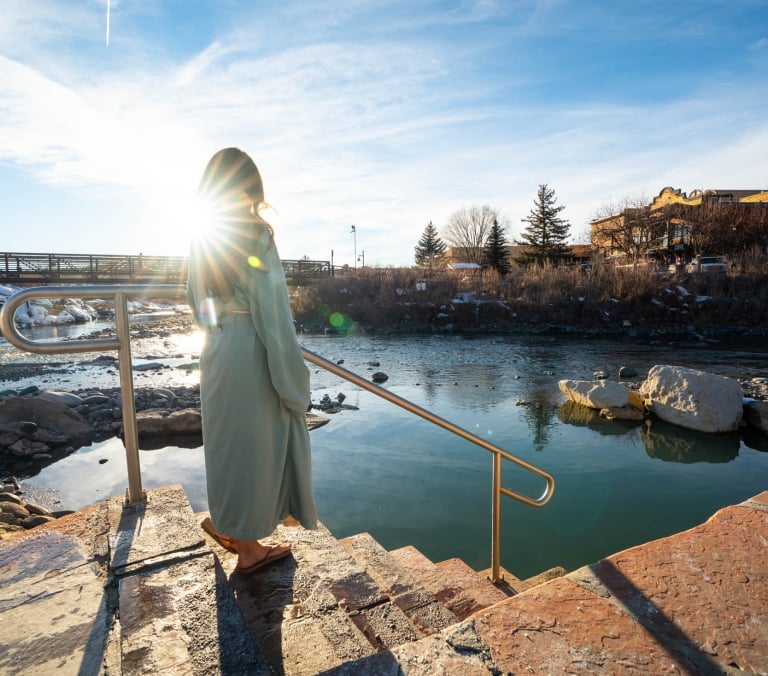
Warm water lowers blood pressure, and getting out quickly is when most lightheadedness happens. Sit on the edge for a moment before standing, and use handrails where they are available.
Go easy on alcohol the first day
Alcohol contributes to dehydration and hits harder at elevation. Saving it for later in the trip, or pairing each drink with water, makes a real difference.
Eat regular meals
Appetite often drops at altitude, but skipping meals before a long soak is a reliable way to feel unwell. A normal meal schedule supports the adjustment.
Pace your first day of activity
Hiking a fourteener and then soaking for three hours on your arrival day is a lot to ask of a body still adjusting. Many visitors find the reverse order works better: soak on arrival day, hike on day two.
When to Get Out of the Water
Regardless of elevation, exit the pool and cool down if you experience:
Lightheadedness or dizziness
Nausea
A racing or irregular heartbeat
Headache that worsens while soaking
Tingling in the hands or feet
Any sense of overheating
Cool down gradually, drink water, and rest before returning. If symptoms persist after you have cooled off, seek medical attention.
Who Should Talk to a Doctor First
High-altitude soaking is well tolerated by most healthy adults, but warm water immersion places demands on the cardiovascular system, and elevation adds to those demands. Consider speaking with your physician before your trip if you:
Have a heart condition or a history of cardiovascular events
Take blood pressure medication
Are pregnant
Have a respiratory condition such as COPD or severe asthma
Have diabetes with reduced sensation in the feet
Have had a recent surgery or open wounds
This guidance is general and is not a substitute for medical advice specific to your situation.
Soaking at 7,100 Feet in Pagosa Springs
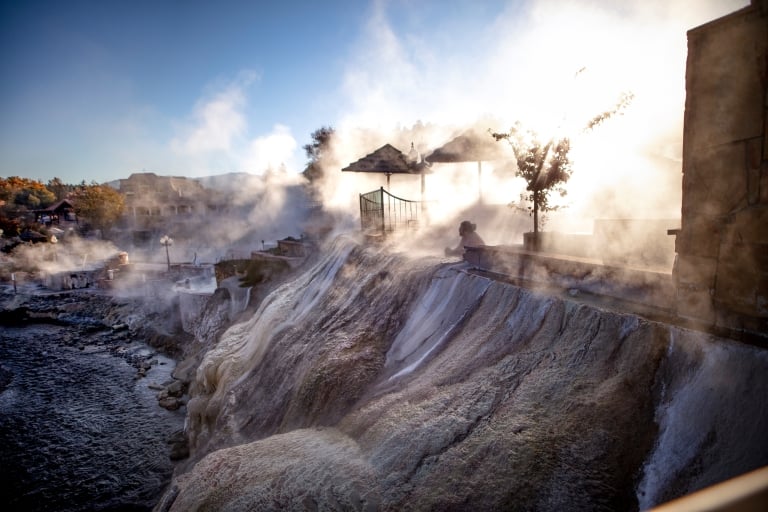
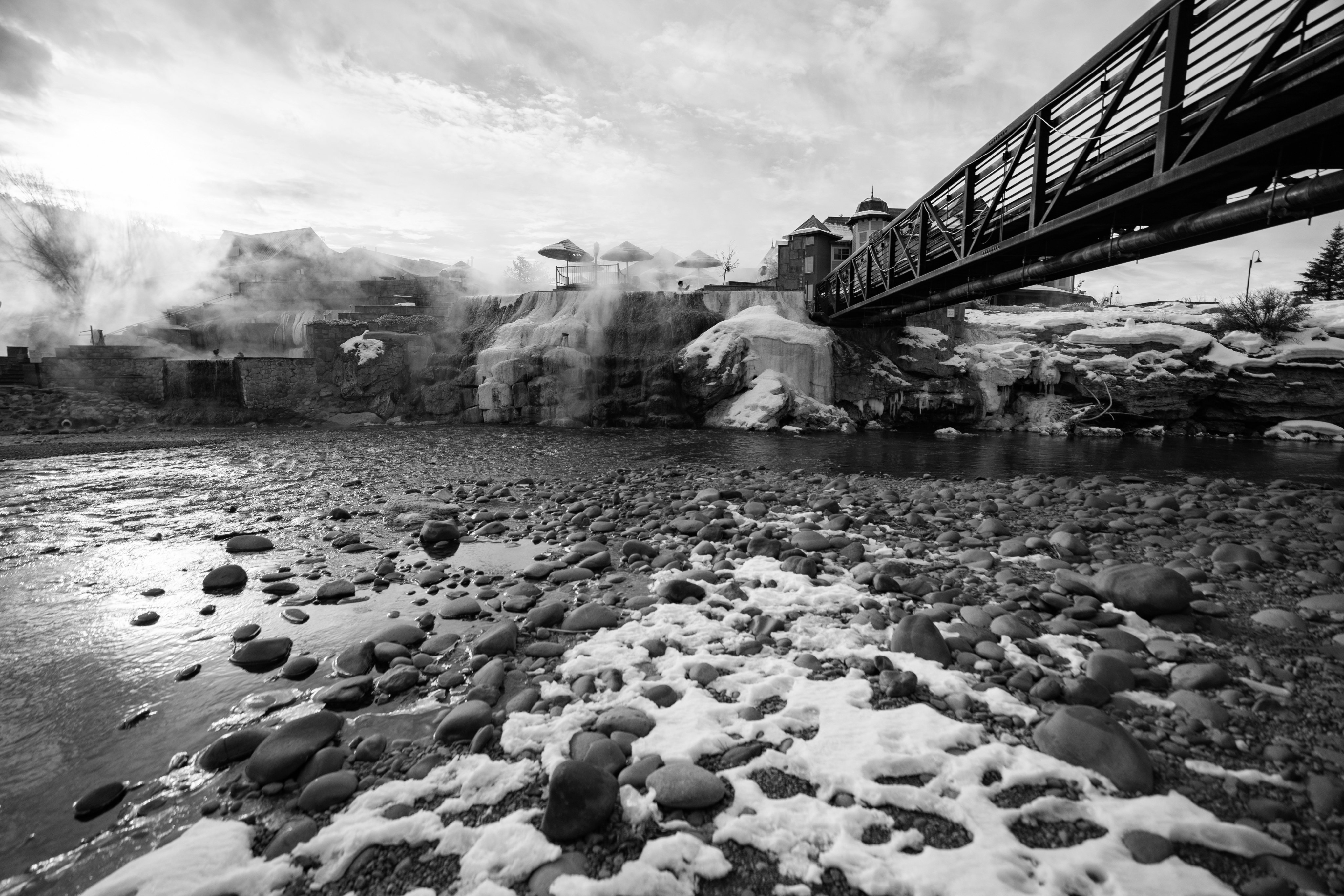
The Springs Resort sits at more than 7,100 feet along the San Juan River, and a few features of the property make adjusting to elevation easier than it is at many high-altitude hot springs.
A wide temperature range. Soaking options span 50+ geothermal pools from cold plunges around 35°F to hot pools reaching roughly 112°F, which means new arrivals can start in a moderate pool rather than jumping straight into the hottest water.
Posted temperatures at every pool. Choosing a pool by number rather than by feel makes it far easier to pace a first day sensibly.
24-hour access for overnight guests. Short sessions spread across a full day are gentler on a body adjusting to elevation than one long soak, and unlimited access makes that practical.
Hydration stations throughout the property. Refilling without leaving the pool deck removes the main barrier to drinking enough water.
Naturopathic Medical Director on staff. The Springs Resort is the only U.S. hot springs resort with a dedicated naturopathic Medical Director overseeing wellness programming.
The Mother Spring, the world’s deepest geothermal hot spring at 1,002+ feet, verified by Guinness World Records, carries 13 naturally occurring therapeutic minerals to the surface at Pagosa Springs.
Frequently Asked Questions
Is soaking in hot springs at high altitude safe?
For most healthy adults, yes. The main adjustments are shorter sessions, more water, and slower transitions in and out of the pools during the first day. People with cardiovascular conditions, respiratory conditions, or who are pregnant should speak with a physician before soaking at elevation.
How long should you soak at 7,000 feet?
Many visitors find 15 to 20 minutes per session with a cooling break in between works well, particularly on the first day. Individual tolerance varies with water temperature, health conditions, medications, and how recently you arrived.
Does altitude make hot springs feel hotter?
The water temperature is the same, but the combination of lower oxygen availability and faster dehydration can make a given temperature feel more intense than it would at sea level. Cooler mountain air outside the pool can also make the contrast feel sharper.
Should you soak on your first day at altitude?
Soaking on arrival day is fine and often helps with rest, provided you keep sessions shorter, drink extra water, and skip alcohol. What tends to cause problems is combining arrival day with strenuous hiking and a long, hot soak.
Does soaking help with altitude adjustment?
Soaking does not speed acclimation, but many travelers find that a warm evening soak supports better rest, which helps with how you feel the following day. Research on warm-water immersion before bedtime has linked it to improvements in sleep quality.
To plan a visit to The Springs Resort, visit pagosahotsprings.com
Don't Miss Out!
Sign up for deals, news & more.