What “Medical Integration” Really Means in Hot Springs Wellness Tourism
By Dr. Marcus Coplin, ND
Medical Director, The Springs Resort & Murrieta Hot Springs Resort
Wellness tourism is evolving.
For decades, travelers have sought out hot springs for relaxation with warm mineral water, mountain air, and a temporary escape from stress. Today, however, guests are asking something deeper: How can this experience actively support my long-term health?
That question has given rise to a concept known as medical integration in wellness tourism.
It may sound clinical, but it isn’t. At its core, medical integration ensures that wellness experiences, including hydrothermal therapy, are designed in alignment with human physiology, safety, and evidence-informed practice.
What Is Medical Integration in Hot Springs Wellness Tourism?
Medical integration in hot springs wellness tourism is the collaboration between licensed medical professionals and resort wellness programming to ensure safety, personalization, and physiological alignment. It bridges hydrothermal therapy, nutrition, recovery practices, and mindfulness with clinical oversight to support stress regulation, sleep quality, circulatory health, and overall vitality.
This approach aligns with how the Global Wellness Institute defines wellness, as the active pursuit of activities, choices, and lifestyles that lead to a state of holistic health [1].
Importantly, medical integration is not the same as medical tourism. The distinction is outlined clearly in the Global Wellness Institute’s Wellness Tourism vs. Medical Tourism report. Medical tourism typically involves traveling for procedures or disease treatment, while wellness tourism focuses on prevention and vitality [2].
| Wellness Tourism | Medical Tourism |
|---|---|
| Goal: Proactive: maintain or enhance well-being | Goal: Reactive: treat a specific disease or condition |
| Focus: Prevention, vitality, holistic health | Focus: Procedures, diagnosis, treatment |
| Oversight: Wellness professionals, medical advisors | Oversight: Surgeons, specialists, clinical staff |
Medical integration strengthens wellness tourism by grounding it in professional oversight and physiological understanding.
Why Medical Oversight Matters in a Hot Springs Environment
Hot springs have been used therapeutically for thousands of years. Historical research on thermal medicine, from Roman bath culture to European balneology, documents immersion’s association with musculoskeletal relief, circulation support, and relaxation. A review of the history of thermal medicine published in the National Institutes of Health archive highlights this long-standing therapeutic tradition [3].
Modern physiology helps explain why:
● Vasodilation: Warm mineral immersion widens blood vessels, improving circulation and oxygen flow
● Muscular Relaxation: Heat helps release muscle tension and reduce soreness
● Vascular Stimulation: Alternating between hot and cold Pools (contrast hydrotherapy) can stimulate vascular responsiveness
● Parasympathetic Activation: Structured immersion supports the body’s primary recovery state, often called the “rest and digest” system
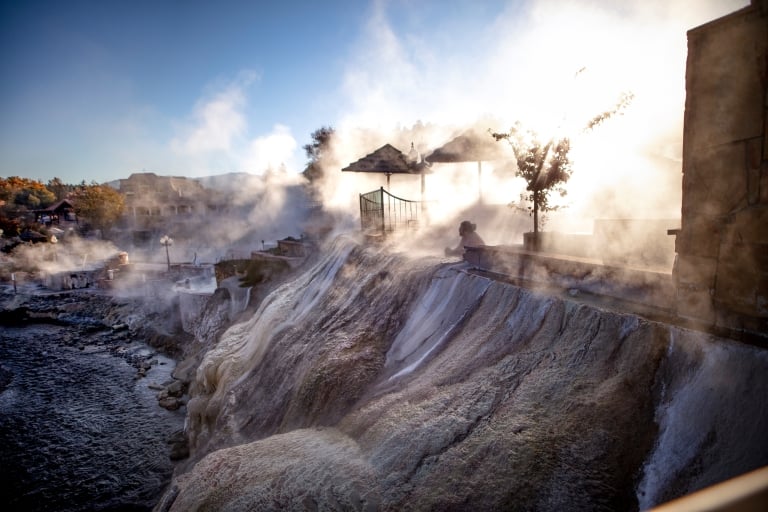
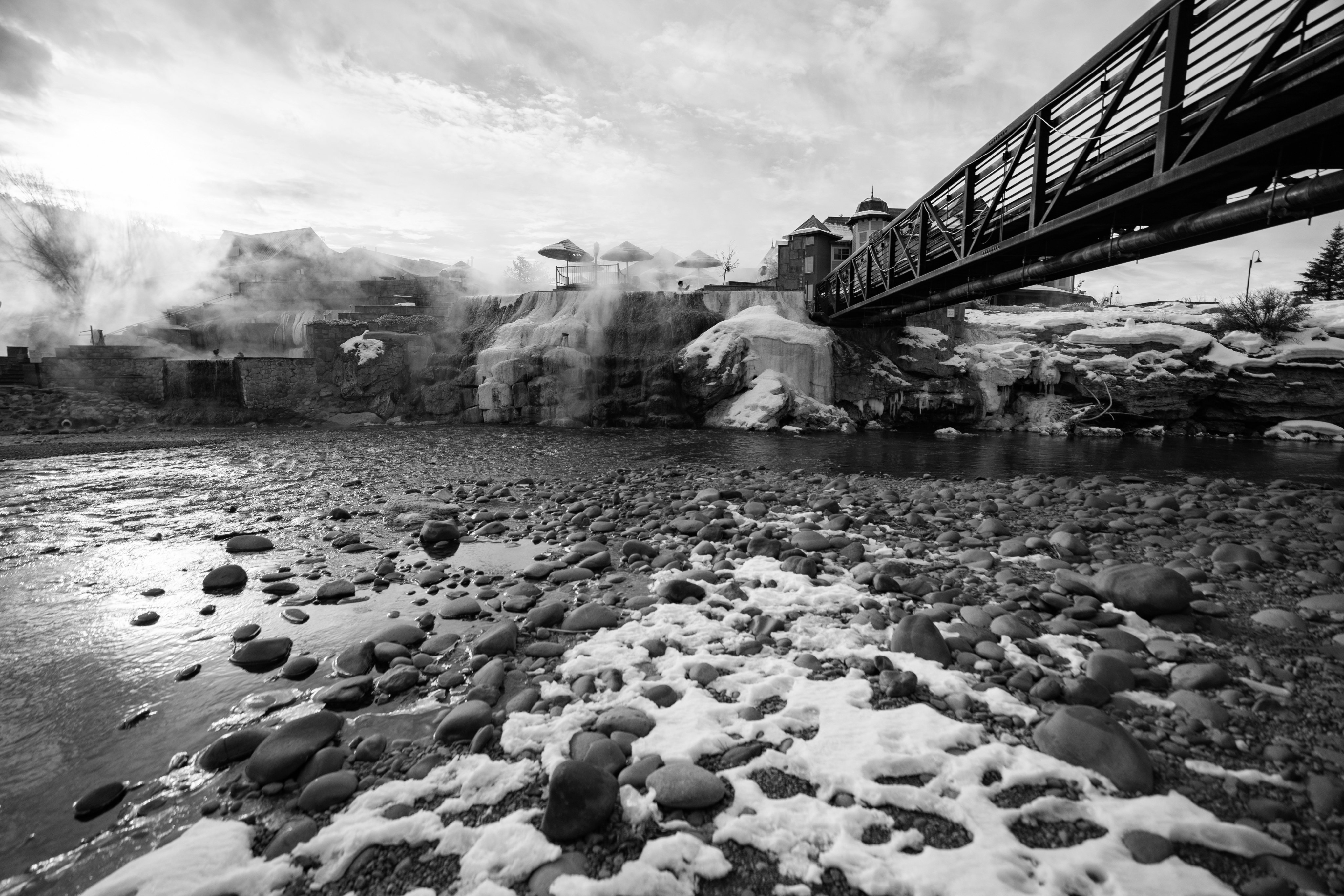
At The Springs Resort, named USA Today’s #1 Best Hot Springs Resort in the US, these principles are applied intentionally. The resort features 50+ geothermal pools, more natural hot springs pools than any other single resort property in North America, fed by the Mother Spring — the world’s deepest geothermal hot spring at 1,002+ feet, verified by Guinness World Records.
The pools span a wide temperature range, allowing for structured hydrothermal sequencing rather than passive soaking alone. Overnight guests receive 24-hour unlimited access to all geothermal pools, enabling recovery rhythms that align more naturally with circadian biology. You can explore our geothermal soaking experience here.
As I often explain:
| “Medical integration doesn’t medicalize a hot springs experience. It ensures the experience honors how the body regulates stress, circulation, and recovery.” |
Stress Regulation and Nervous System Recovery
One of the primary reasons people seek hot springs wellness tourism is stress reduction.
Chronic stress elevates cortisol and disrupts circadian patterns. Over time, this can impair sleep quality, mood stability, and resilience.
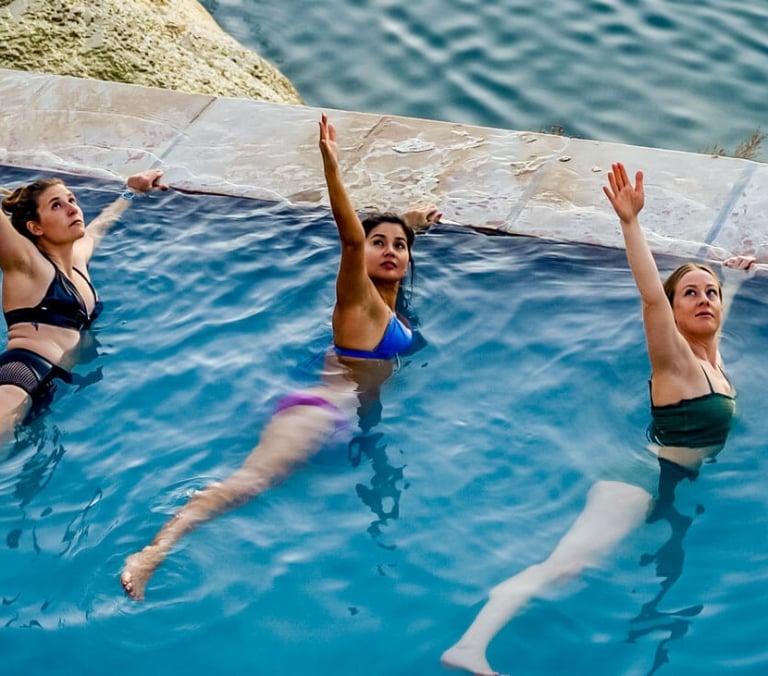
Hydrothermal immersion, particularly when structured thoughtfully, can support parasympathetic activation. When paired with breathwork, mindfulness practices, and recovery education, these experiences create an environment where the nervous system can downshift.
Medical integration ensures:
● Guests with cardiovascular considerations are guided safely
● Heat exposure durations are appropriate
● Hydration and electrolyte balance are emphasized
● Cold exposure is sequenced responsibly
| “We’re not prescribing relaxation. We’re creating conditions where the nervous system can regulate itself.” |
Our wellness programming integrates these principles across hydrothermal therapy, guided sessions, and educational experiences.
Sleep, Recovery, and Circadian Alignment
Sleep disruption is increasingly common in modern life.
Evening thermal therapy may support body temperature regulation which is a key factor in sleep initiation. Hydrothermal immersion followed by gradual cooling mirrors natural physiological rhythms associated with rest.
At medically integrated hot springs resorts, programming may include:
● Pre-sleep wind-down guidance (learn about our sleep wellness tray)
● Light exposure awareness
● Gentle temperature sequencing
● Recovery education
The goal is not to promise cures for insomnia. It is to create a recovery-forward environment grounded in physiology.
| “Sleep is not passive. It is one of the body’s most active regenerative processes. Our role is to support that process, not override it.” |
Detox, Environmental Medicine, and Responsible Framing
The word “detox” is often oversimplified in wellness marketing.
The human body already possesses sophisticated detoxification systems, primarily the liver, kidneys, lungs, and gastrointestinal tract. Sauna exposure and hydrothermal immersion may support circulation and perspiration, which are components of natural elimination processes.
Medical integration avoids exaggerated claims. Instead, it focuses on supporting the body’s inherent regulatory systems.
Environmental medicine, an emerging area within wellness, emphasizes clean air, mineral-rich water, and thoughtful design. In geothermal environments, responsible water monitoring and environmental stewardship are essential components of that commitment.
Supporting detox pathways is not about dramatic claims. It is about respecting biology.
Rehabilitation Support and Movement Recovery
Hydrothermal environments can complement physical recovery.
Warm water reduces joint loading and muscular tension, allowing for gentle mobility. Alternating temperatures may support post-exertion recovery when sequenced appropriately.
However, medically integrated hot springs resorts do not replace medical treatment or physical therapy. They provide adjunctive support within a structured environment.
| “Our responsibility is to understand where someone is in their health journey and ensure that what we recommend is supportive, not overstated.” |
The Role of a Medical Director in Wellness Tourism
Medical integration requires oversight.
As Medical Director, my responsibilities include:
● Reviewing hydrothermal programming for safety and physiological alignment
● Advising on contraindications and guest screening considerations
● Supporting staff education
● Ensuring wellness programming reflects evidence-informed principles
Medical integration does not transform a resort into a clinic. It elevates standards within experiential environments.
The Future of Hot Springs Wellness Leadership
Wellness tourism is moving beyond aesthetic relaxation into intentional recovery design.
As interest grows in longevity, sleep optimization, environmental health, and integrative care, the convergence between wellness and medicine will continue.
At The Springs Resort in Pagosa Springs, medical integration reflects a commitment to aligning geothermal immersion, environmental stewardship, and structured recovery experiences with how the human body truly functions.
Medical integration is not a trend. It is a commitment to coherence between science, nature, and human vitality.
About the Author
Dr. Marcus Coplin, ND is the Medical Director for The Springs Resort in Pagosa Springs, Colorado and Murrieta Hot Springs Resort in California. A licensed naturopathic physician with advanced training in hydrothermal therapy and integrative wellness, Dr. Coplin oversees medical integration strategy, safety protocols, and evidence-informed program design at both destinations. His work focuses on aligning geothermal environments, recovery science, and regenerative wellness principles to support long-term vitality.
Sources
1. Global Wellness Institute. (n.d.). What is Wellness?
2. Global Wellness Institute. (2018 ). Wellness Tourism and Medical Tourism: Where Do Spas Fit?
3. Gianfaldoni, S., Tchernev, G., Wollina, U., et al. (2017 ). History of the Baths and Thermal Medicine. PMC (PubMed Central).
Don't Miss Out!
Sign up for deals, news & more.