Sleep Wellness at Hot Springs Resorts: Why Overnight Stays Maximize Benefit
| Key Takeaways |
|---|
|
Why Timing Matters for Better Sleep
Many people assume the benefits of geothermal hot springs come entirely from the minerals in the water. While mineral-rich water is one part of the experience, researchers believe timing may play an equally important role when the goal is better sleep.
A warm soak temporarily raises body temperature. As the body cools afterward, it naturally loses heat through the skin, a process that mirrors part of the body’s normal preparation for sleep. Researchers believe this cooling response may help reduce the time it takes to fall asleep.
What Research Suggests
| Research Finding | Practical Takeaway |
|---|---|
| Warm bathing approximately 1 to 2 hours before bed improved sleep onset in multiple studies.1 | Schedule your final soak in the evening rather than immediately before bed. |
| Water temperatures around 40 to 42.5°C (104 to 108.5°F) showed the strongest evidence.1 | Moderate-to-warm pools may be preferable before bedtime. |
| Even 10 to 20 minutes of immersion may be sufficient.1 | Longer is not necessarily better. |
Why Overnight Stays Offer an Advantage
A day trip can certainly be relaxing. However, an overnight stay removes many of the practical barriers that can shorten or interrupt the body’s transition from relaxation to sleep.
Instead of:
● Drying off quickly
● Getting dressed
● Driving home
● Navigating traffic
● Completing an evening routine
Overnight guests can simply return to their room when they are ready for bed.
That uninterrupted transition from warm-water immersion to sleep may help preserve the relaxation created during soaking.
The Science Behind Evening Hot Springs Soaking
Researchers studying passive body heating have identified several physiological changes that may explain why many people report sleeping better after an evening soak.
Possible mechanisms include:1
● Increased circulation to the skin
● A gradual drop in core body temperature afterward
● Reduced sleep onset latency
● Improved subjective sleep quality
● Greater relaxation before bedtime
These mechanisms connect closely to circadian rhythm and the body’s natural transition into deep rest, a topic we explore further in The Science of Sleep.
Importantly, the evidence is strongest for warm water immersion before bedtime, not necessarily for soaking immediately before getting into bed. Most studies suggest allowing roughly one to two hours between the end of the soak and sleep.1
Maximizing Mineral Benefit
Natural geothermal water contains dissolved minerals that vary by spring.
Researchers continue to investigate whether specific minerals found in thermal waters contribute independently to muscle relaxation, pain reduction, and recovery. While mineral composition may play a role, the strongest clinical evidence supports the overall therapeutic effects of balneotherapy rather than the absorption of individual minerals through the skin. Evidence for clinically meaningful transdermal absorption of minerals such as magnesium remains limited.3,4
Warm mineral bathing combines thermal effects, buoyancy, hydrostatic pressure, and mineral-rich water, all of which may contribute to perceived improvements in comfort and relaxation.
Can Multiple Days Produce Greater Benefits?
One soak can certainly feel restorative.
However, many studies evaluating balneotherapy for chronic pain and musculoskeletal conditions involve repeated treatments over several days or weeks rather than a single session. Those studies often report greater improvements over time.2,3
Although these studies involve patients rather than vacation travelers, they suggest wellness effects may accumulate with repeated exposure.
That makes an overnight wellness retreat especially appealing for travelers interested in recovery, stress management, or sleep.
Creating a Better Sleep Routine
One advantage of staying overnight is the ability to build a complete evening routine instead of squeezing a soak into a busy travel day.
A simple routine could include:
● Eat dinner several hours before bed: Choose a balanced meal that is satisfying without being overly heavy. Digestion and gut health also influence hormone and energy pathways tied to sleep quality.
● Soak 1 to 2 hours before bedtime: Spend 15 to 30 minutes in a comfortably warm geothermal pool.
● Rehydrate: Thermal bathing increases sweating, making hydration important before bed.
● Allow your body to cool naturally: Spend several minutes walking or relaxing before going to sleep.
● Minimize bright screens: Support your body’s natural circadian rhythm with a calm evening environment.
Why The Springs Resort Is Built for Sleep Wellness
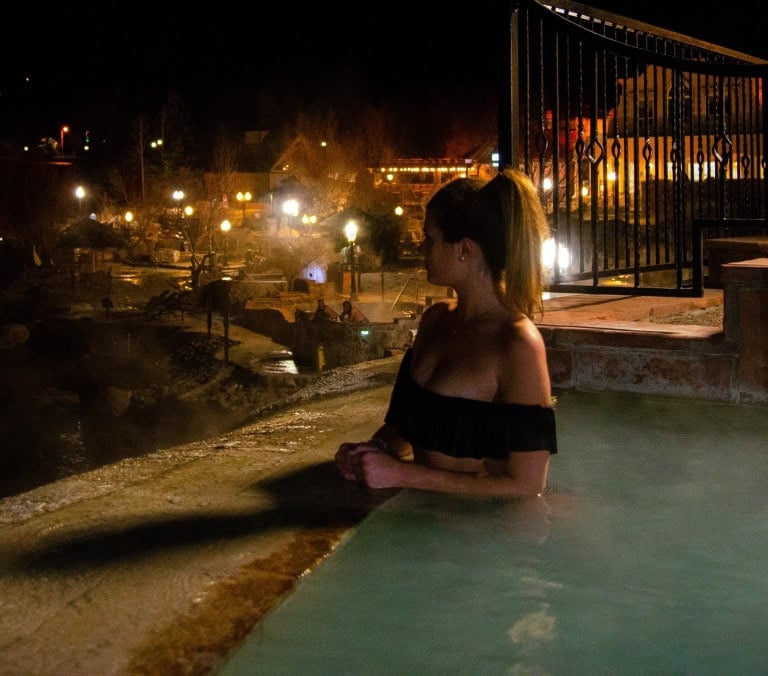
Unlike a typical day visit, The Springs Resort is designed to support recovery from arrival through bedtime. One notable benefit at The Springs Resort is that overnight guests receive 24-hour unlimited access to more than 50 geothermal pools, including the Mother Spring, allowing guests to soak during the evening or even later at night without watching the clock.
Overnight guests can also enjoy The Springs Resort’s Sleep Tray, curated by Medical Director Dr. Marcus Coplin, as part of the resort’s broader focus on sleep wellness.
Is An Overnight Stay Worth It?
For travelers whose primary goal is to simply experience the pools, a day visit may be enough. Access and overnight policies vary widely between properties, which is worth checking when comparing Colorado hot springs resorts. However, an overnight stay offers several advantages.
| Day Visit | Overnight Stay |
|---|---|
| Limited soaking window | Flexible soaking schedule |
| Must drive home afterward | Walk directly to your room |
| Less opportunity for evening relaxation | Sleep immediately after your evening wellness routine |
| One soaking session | Multiple soaking opportunities over two days |
FAQs
| Does soaking in hot springs actually help you sleep? |
|---|
| Research suggests warm-water immersion before bedtime may help people fall asleep faster and improve subjective sleep quality by supporting the body’s natural cooling process after bathing. The strongest evidence recommends soaking approximately one to two hours before bedtime.1 |
| How long should I stay in a geothermal pool before bed? |
|---|
| Many sleep studies have noted benefits begin at just 10 to 20 minutes of warm-water immersion. Individual tolerance varies, so follow posted guidance, stay hydrated, and exit the pool if you begin feeling overheated.1 See our soaking guide for temperature and duration recommendations. |
| Why stay overnight instead of visiting for the day? |
|---|
| An overnight wellness resort experience removes the need to drive home immediately after soaking and allows guests to use evening pool access as part of a complete bedtime routine. At The Springs Resort, overnight guests also enjoy 24-hour access to the geothermal pools. |
To book a visit to The Springs Resort, visit: https://www.pagosahotsprings.com/accommodations/
References
- Haghayegh, S., Khoshnevis, S., Smolensky, M. H., Diller, K. R., & Castriotta, R. J. (2019). Before-bedtime passive body heating by warm shower or bath to improve sleep: A systematic review and meta-analysis. Sleep Medicine Reviews, 46, 124–135.
https://doi.org/10.1016/j.smrv.2019.04.008 - Castelli, L., et al. (2022). Sleep and spa therapies: What is the role of balneotherapy associated with exercise? A systematic review.
- Kamioka, H., Nobuoka, S., & Iiyama, J. (2020). Overview of systematic reviews with meta-analysis based on randomized controlled trials of balneotherapy and spa therapy from 2000 to 2019. International Journal of General Medicine, 13, 429–442.
https://doi.org/10.2147/IJGM.S261820 - Gröber, U., Werner, T., Vormann, J., & Kisters, K. (2017). Myth or reality—Transdermal magnesium? Nutrients, 9(8), 813.
https://doi.org/10.3390/nu9080813
Don't Miss Out!
Sign up for deals, news & more.